FrankWilhoit 9 hours ago
Advertising is, quite simply, a form of abuse. It is psychic violence that leaves no outward mark but diminishes its target by attempting to replace their perceptions, judgments, intentions with its own. A society with a pragmatic regard for its own survival would ban it outright.
Aloisius 18 minutes ago
This comment feels like you're trying to replace my own perception and judgement about advertising with your own. Are you committing psychic violence by trying to persuade me?

I don't see why advertising is any more abusive than any other unsolicited opinion foisted upon me in every day life.

themafia 6 hours ago
Advertising is just a subset of a larger medium. It's a fully generic channel. Psychological manipulation is abusive and is often the tactic used by advertisers in order to see a return on their advertising spending.

I feel this means you can have ads, but, you really do need a large scale entity intelligently policing them or the tendency will constantly be towards abuse. On the balance, it is probably more efficient to just ban them, but many nations recognize the right to free speech and have arrived at the conclusion that advertising is included under that umbrella.

So, we probably need to make ads prohibitively expensive, and legally risky, such that the volume of them decreases dramatically.

overfeed 5 hours ago
> So, we probably need to make ads prohibitively expensive, and legally risky, such that the volume of them decreases dramatically.

i.e. those with lots of money get a lot of ad time and no one else gets any. I can think of a number of ways why this is inadvisable, across multiple axes, social, economic, and political.

themafia 2 hours ago
Advertising is not particularly expensive as it is, go look up the "rate card" for your favorite broadcaster, even if you increased those rates by an order of magnitude they would still be approachable by most clients. You would also expect that if the cost of ads go up then the number of "avails" for them would go down.

Collective industry groups would advertise more and politicians would advertise a lot less.

overfeed 31 minutes ago
> Advertising is not particularly expensive

I'm sure it's not expensive right now, but I was extrapolating the likely outcome from your hypothetical:

>> ... we probably need to make ads prohibitively expensive

themafia 4 minutes ago
A poor choice of words. They're so cheap now advertisers can spam the channel. That's the behavior you want to prohibit, not overall access, which again, even facing an order of magnitude increase, would still be viable.
popalchemist 8 hours ago
The conclusion that every government came to after Bernays' "Crystallizing Public Opinion" is that the society who can be arbitrarily manipulated by propaganda is better because it's something like adding a rudder to a rudderless ship.
themafia 6 hours ago
Society has a rudder. You couldn't claim a society exists _without_ one. It's a defining characteristic.

What society doesn't have is a _fast_ or particularly responsive rudder. It moves slow and hates capricious changes. It frustrates capital which wants to move quickly and change as often as is needed to derive greater profits.

They're not manipulating you for your own good. They're doing it for money.

popalchemist 28 minutes ago
As I said elsewhere, Yes, I am not advocating for it. Just pointing to the historical moment when the insight became concrete enough to deploy. The propaganda arm of the modern economic apparatus is -literally- The Matrix. The political / economic theories that inspired The Matrix are works like Society of the Spectacle which express exactly what you just said in extreme detail; that whoever has control or even just a significant influence over the images and words that move through peoples' minds in effect has them enslaved in a form of Panopticon.
staplers 8 hours ago
If democracy is predicated on independent thought and decision (free speech, free vote), then the "rudder" in this analogy becomes authoritarianism with an additional step.
popalchemist 8 hours ago
Yes, I am not advocating for it. Just pointing to the historical moment when the insight became concrete enough to deploy. The propaganda arm of the modern economic apparatus is -literally- The Matrix. The political / economic theories that inspired The Matrix are works like Society of the Spectacle which express exactly what you just said in extreme detail; that whoever has control or even just a significant influence over the images and words that move through peoples' minds in effect has them enslaved in a form of Panopticon.
amelius 6 hours ago
Except foreign powers can also control that rudder.
AnimalMuppet 8 hours ago
There are two kinds of advertising. I will call them "scarcity advertising" and "abundance advertising".

Scarcity advertising is, for example, "Joe's grocery now has cantaloupes" (back in the day when cantaloupes were not available all year). It's information - something is now available that wasn't available before.

Abundance advertising is, for example, "The Chevrolet SomeHotCar will give you an exciting life like the people in this ad. Don't you want that?" As someone put it (wish I remember who, I would give credit): "[This kind of] advertising attempts to make the person you are envy the person you could be with their product. In other words, it attempts to steal your satisfaction and then offers to sell it back to you."

The first kind of advertising is useful. The second is abusive.

cm2012 8 hours ago
I have run hundreds of millions in advertising dollars for dozens of companies. The vast majority of ad spend is the former category.
rswerve 3 hours ago
What a great way to put it. I went looking and it’s from John Berger’s Ways of Seeing.

> The spectator-buyer is meant to envy herself as she will become if she buys the product. She is meant to imagine herself transformed by the product into an object of envy for others, an envy which will then justify her loving herself. One could put this another way: the publicity image steals her love of herself as she is, and offers it back to her for the price of the product.

https://www.ways-of-seeing.com/ch7

zeroonetwothree 8 hours ago
Usually the second type is called “brand advertising”. The idea is to create a positive association with a brand and not expect you to take any immediate action. The first type maybe “action advertising” (I’ve heard other terms).

Most advertising is actually the first type.

strongpigeon 6 hours ago
Assuming you mean "conversion advertising" vs "brand advertising", what I remember looking at industry-wide numbers when I worked on Google Ads was that they're actually pretty close, with brand advertising being slightly bigger. Something like 60/40 industrywide.

Now, it varies widely depending on the medium, search ads lean way more on conversion advertising, with display and especially video ads leaning more on the brand side.

phantasmish 5 hours ago
We could always allow opt-in advertising (“send me your monthly/weekly/whatever catalog”) and ban the unsolicited kind. This could extend to asking for things like trade magazines or email newsletters or what have you.

Useful kind preserved, evil kind squashed.

amelius 6 hours ago
There are two kinds of advertising. One kind slaps you in the face at the least expected moment. The other kind is like the yellow pages which you open whenever you need something.
kerkeslager 8 hours ago
Is the first kind of advertising useful? It seems like there are better ways to obtain that information, like, for example a search. The benefit being that I only am presented with that information if I actually need/want cantaloups
MangoToupe 8 hours ago
> The first kind of advertising is useful.

What utility does the first sort of advertising have? At best it seems non-abusive, but it still clogs up our brains with crap we don't need and didn't ask for.

brk 8 hours ago
Unless you like cantaloupes.
hdgvhicv 7 hours ago
If advertising was for my benefit it would be optional.
rightbyte 6 hours ago
I miss brochures ...
BLKNSLVR 6 hours ago
But now I want a cantaloupe and beforehand I didn't, and I'm slightly less happy and satisfied with this lack of cantaloupe that I now viscerally feel.

Whilst I'm at the grocery store is the appropriate time to work out that cantaloupe is an option.

Not in the middle of watching a cricket match.

wholinator2 3 hours ago
Is this satire? Does merely seeing a picture of a cantaloup on a shelf harm your psyche? Sure, if it's a model holding them up to her chest saying "come get my melons" i can understand that might qualify. But i don't see how "joe's has cantaloup again" would make you feel literally anything unless you already wanted cantaloupe, in which case the notification was beneficial in _allieving_ a negative emotion and not creating one.

I admit that the line gets very fuzzy at a certain point but i think we can agree that the extremes are different things.

sershe 8 hours ago
How about an ad (assuming an honest product, since this thread is clearly about ads as such) in a remote village saying "get a work visa to Europe/US, you could live like these people with higher living standards!"

People who were quite happy being subsistence farmers are now aware, or much more aware, of the possibility of higher living standards. Doesn't seem immoral to me. Why would a car ad be immoral then? Perhaps it will improve the average purchasers life? I say it someone who is quite happy with a 15yo Honda Fit :)

SoftTalker 9 hours ago
By what other means would people with a product or service to provide reach other people who are interested in obtaining that product or service?
morleytj 9 hours ago
Currently I think it is difficult to argue that advertising in its most visible forms have any serious benefit to people looking to obtain a service.

How often does an actual random advertisement shown on a billboard or a preroll youtube ad actually lead to a quality product? I think it is fairly common for people who are acquiring the best versions of things to do so primarily through research in forums or reviews, which is coming from the user looking from the product, rather than the product forcing itself into the mind of a given user to convince them to consume it.

theendisney 4 hours ago
The highest margins buy the most advertisements.
jgeada 9 hours ago
Word of mouth. If you make happy customers, they'll readily tell others.

But the truth is most modern products aren't good enough to earn word of mouth.

A good example of how to work it right is Steam: while it is not perfect, most discussions give them benefit of doubt because most of the time they do work for the best interest of their customers, not just themselves.

venturecruelty 8 hours ago
Eeyup. Costco does zero advertising, and yet everyone knows about Costco. Why? Because they're good. In reality, the prices don't always work out, but they have so many other nice things: opticians, tires, a food court (with loss leaders!), rotisserie chicken (also a loss leader), solid products, etc. Costco exists to make money, sure, but it doesn't feel like they're trying to screw you. I can't say that about 99.9% of companies now.
Aloisius 38 minutes ago
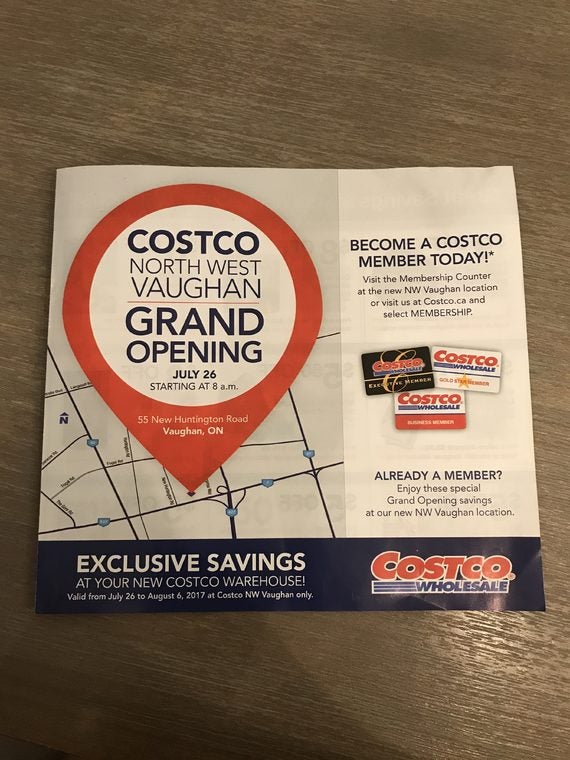
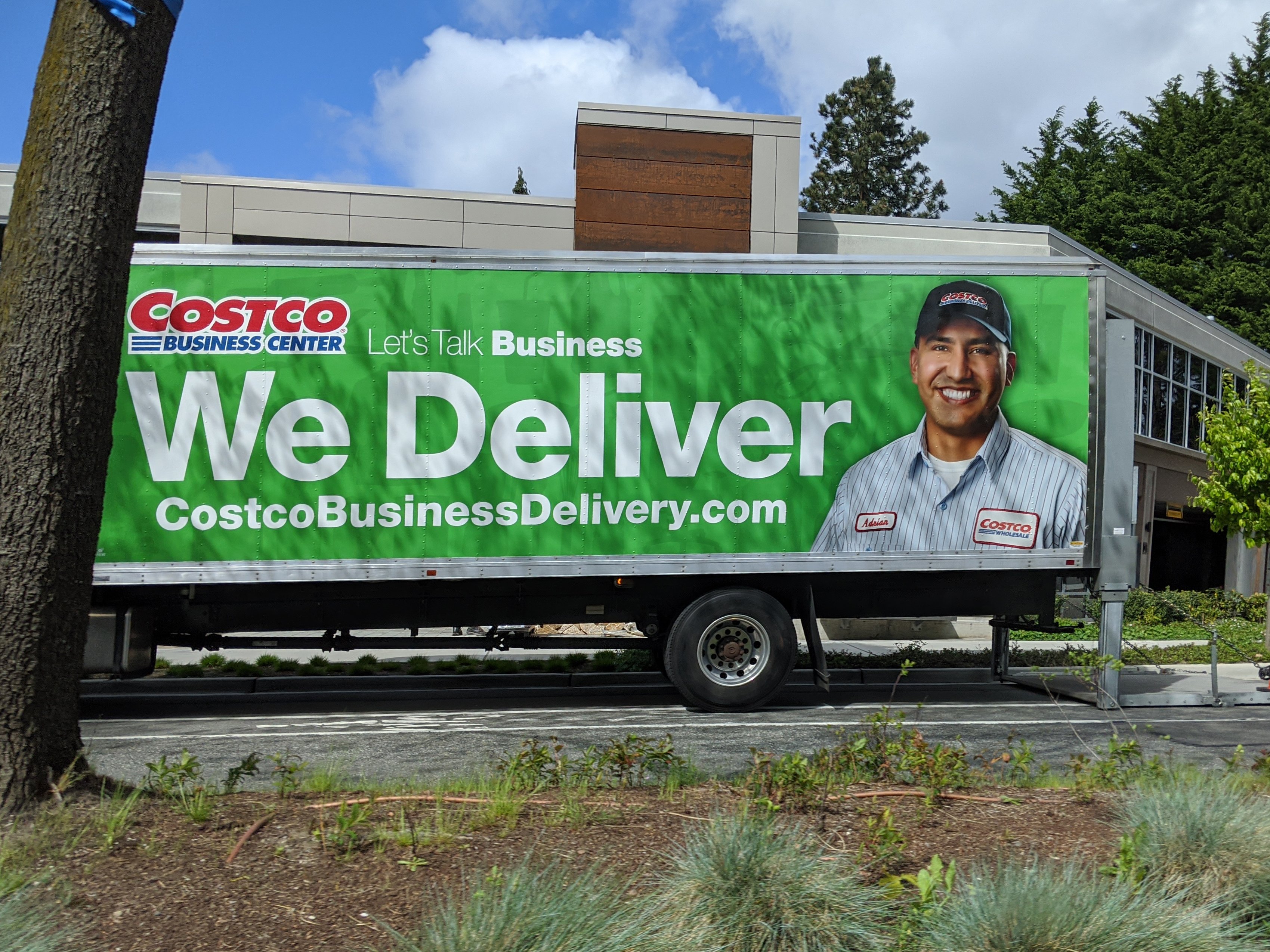
Costco doesn't advertise as much as most large chains certainly, but they do advertise - often when new stores open or just on things they own.

Costco Newspaper Ad (1983) - https://www.reddit.com/media?url=https%3A%2F%2Fi.redd.it%2F9...

New Store Opening Mailer Ad (2017) - https://f.dam-img.rfdcontent.com/cms/003/156/029/570x760_sma...

Costco Billboard Ad - https://media.licdn.com/dms/image/v2/C5622AQHWe0NE1JEf3Q/fee...

Costco Cross Promotion Billboard Ad - https://media.licdn.com/dms/image/v2/C5622AQFS_ctNErQKBA/fee...

Costco Delivery Truck Ad - https://www.getmulberry.com/hubfs/shutterstock_1718840200.jp...

themafia 6 hours ago
> Costco does zero advertising

What is the monthly magazine they send me, then?

rightbyte 6 hours ago
Membership magazine.
venturecruelty 6 hours ago
I don't know.
harrigan 9 hours ago
We replace push advertising (unsolicited messages) with pull systems (discoverability on demand).
nickff 9 hours ago
Discoverability is a very difficult challenge, especially for small niches. Many customers contact my employer, saying that they didn't know our products existed (and many products have existed in some form for >10 years). If you can find a way to improve discoverability, you would be a hero to many niche businesses.
scubbo 8 hours ago
I truly don't care. I would much rather miss out on hearing about a few genuinely-desirable products due to poor discoverability, if the payoff is that I don't have to suffer the deluge of imposed advertizing I never asked for.
nickff 8 hours ago
Do you have any non-feeling based thoughts to contribute? I see your comment as being non-constructive, as you have not presented any new information or thinking.
000ooo000 7 hours ago
They just gave you a potential customer's perspective. The fact you wrote this off as uninteresting is telling.
theendisney 3 hours ago
Thats like saying i dont care if i have to rub the product in your face as long as you buy it it is fine with me.

I've got mine jack!

lol

hackable_sand 3 hours ago
"non-feeling based thoughts"

Fake

SantalBlush 8 hours ago
On the contrary, you haven't explained why discoverability matters, or why any of us should care. You just take it as a given that it justifies the means. I believe that is what the poster above is pointing out.
zzo38computer 7 hours ago
I would agree, that I would rather not suffer imposed advertising I did not ask for even if missing out some products.

However, you can have e.g. a magazine that lists computer parts if you want to buy that (as mentioned by another comment), or in a restaurant that has a sign on the wall (or a printed menu) indicating new items, or a news paper might have a section relating to restaurants or movies or whatever else you might want to buy, or there might be publications that specialize in these things if you are deliberately trying to look for them. They should not need to put advertising anywhere, and they should not need to make it excessive or abusive or dishonest like they do, etc.

(Products that they advertise way too much often have some problems other than just the advertising, too.)

theendisney 3 hours ago
Okay, thw question then becomes: How do we get people to deliberatly look?

Say I have this stunning webshop with margins smaller than bezos toilet breaks. How do I survive out there in the jungle?

ndriscoll 6 hours ago
There is absolutely no reason to think that advertising makes discoverability of desirable trades more likely, and every reason to think it makes it worse. The people best equipped to spend a lot on ads are those who are offering the worst deal (giving them the best margins). That's without even getting into ads that are used to manipulate people into wanting to make obviously bad choices, e.g. ads for soda, candy, fast food, alcohol, gambling, pointless plastic garbage, etc.
titzer 8 hours ago
Obviously specifics make a huge difference here so it's hard to generalize, but generally, finding the market is not a new problem. In the current business environment, the entire ecosystem is rigged against you, forcing you to advertise. Consumers are so inundated with advertising that almost have no energy leftover, or any expectation that they need to go out and search. Worse, search is distorted in all the wrong ways because of the exact same incentives. Your competitors (or even poorly-fitting tangentially-related products) are stealing discovery from you by capturing searches through advertising. They can't even get to you because a wall of SEO stands between them and you.
nickff 7 hours ago
I think I (mostly) agree with you, but it seems like SEO and search in general would be even more distorted if outright advertising were disallowed or penalized.
titzer 6 hours ago
It's commercialization in general that distorts things, and you're probably right that SEO without advertising might actually have been worse? But then again, the online advertising market is a whole evolved thing that maybe...doesn't need to be...as big as it is? E.g. I don't see structurally how the economy requires spending hundreds of billions of dollars on advertising to function.
nickff 6 hours ago
Yes, I agree that (on and off-line) advertising does seem to be unnecessarily expensive (across the economy), but valuable 'advertising placements' are scarce, and I'm not sure how else they could be allocated.
hdgvhicv 7 hours ago
In the 90s I would spend my money buying a magazine called computer shopper when to wanted to shop for computer parts.

That’s opt in advertising.

But you as the advertiser is not happy with that

NickM 9 hours ago
Have you really never bought a product or service for some other reason than that you saw an ad for it?

People have plenty of other ways of finding out about useful products and services. You can talk to your friends and family, or go to a store and talk to a salesperson, or look up product reviews online, or even pay for something like a Consumer Reports subscription.

venturecruelty 8 hours ago
Friends and family can be influenced, although I'd still trust them above anyone else. But salespeople are incentivized to lie to you (sorry, it's true). Product reviews are astroturfed by bots now. Consumer Reports, too, has been captured by industry, and is largely useless now.

When the metric is "make sales and make as much money as possible", it will be incredibly difficult to avoid bias from people with a vested interest in selling you something. This is why advertising (admittedly, mixed with our current society) is so insidious: it's very hard to find a third party that isn't trying to profit off of you buying something.

kerkeslager 7 hours ago
> Consumer Reports, too, has been captured by industry, and is largely useless now.

Any evidence of this?

mzajc 9 hours ago
Certainly not through conventional advertising. There's heaps of billboards where I live, and I'd have a very hard time finding one for a shop/service/political party/business that hasn't been around for years.
rfonseca 5 hours ago
The small city of São Paulo (~22M people) has also banned billboards since 2007, and life goes on.
mrguyorama 8 hours ago
Meanwhile Maine banned them decades ago and it turns out the world doesn't end and you can still find ambulance chasing lawyers and weird cults just fine.

Hell, one of our best known lawyers in the entire state is a freaking injury liability one.

But hey, direct evidence of lack of harm never seems to stop all the cockroaches coming out of the woodwork insisting that the world fails if we can't have our eyeballs sold to the highest bidder at every second, and that a different world is just impossible. Gee, I wonder if those people are just ignorant, or maybe have some motivated reasoning, like if most of them were paid entirely by advertising revenue.

venturecruelty 8 hours ago
Something something hard to get a man to understand something...
BigTTYGothGF 8 hours ago
Sounds like someone else's problem, mine is "I don't want to see your ads".
inetknght 9 hours ago
> By what other means would people with a product or service to provide reach other people who are interested in obtaining that product or service?

In my opinion, it would take quite a lack of imagination to ask such a question.

There's many many ways to reach people who want your product. Industry-relevant news publishers and conferences, professional/personal anecdotes (eg, blogs and recommendations), demonstrations and training offers, etc.

A different question would be: by what other means would businesses force their products on people who don't want them? Hopefully the answer is: none.

tweakimp 9 hours ago
They can put their information where it can be found easily by people who are interested-
SoftTalker 8 hours ago
That's advertising.
tweakimp 8 hours ago
No, advertising is putting information in peoples faces as much as possible even if they are not interested at all.
cogman10 8 hours ago
It's solicited advertising. Something I don't think almost anyone has a problem with.

Unsolicited advertising is what everyone hates.

If I go onto my grocery store website and see "we have a sale on xyz" I'm not bothered because I went to that website to see what they have. I'm also not bothered by sales displays in the store. All forms of acceptable advertising.

But what I absolutely hate is navigating a webpage unrelated to my store and seeing "Did you know you can buy widgets at your local store!" or watching youtube and seeing an unskippable 30 second ad for my store. Or getting a newspaper that is actually just 90% advertisement with 2 paragraphs of actual news.

marssaxman 3 hours ago
Can you give an example of "solicited advertising"? I have never heard of such a thing, and can't imagine what it might be.
titzer 8 hours ago
We built computers to store information and make that information searchable. Imagine! The place that sells stuff has a list of things...that you could search through...using a computer. Since you have to sell things somewhere, I am pretty sure the people selling them might put them in the place where people search for them.
hn_acc1 7 hours ago
Sure - NOW. Growing up in the 80s? How did you FIND things? For example, a shop willing to install random non-OEM car part for me? I had to hunt through the yellow pages, cold-call a bunch of places, etc.

My parents are STILL in that mind-set - TV "tells you" about stuff - and TV never lies!!

They're seeing more and more advertising during their "shows". And sadly, becoming more and more susceptible to it as they age - like the thousands of dollars of "apocalypse food buckets" they bought from some televangelist. Most of which they had to leave behind when they moved into the retirement community (ignoring the rationality of buying it in the first place).

titzer 6 hours ago
You had to call a shop that you suspected had the thing and ask them? Sorry for the mocking tone, but yes, I did that too in the 90s. And then they might hold it for you! Or they could order it over the phone for you.

Sometimes you could also talk to people in a shop about what you were really trying to accomplish and they'd give you advice on what you might need or how you could do it.

BLKNSLVR 6 hours ago
I believe that's the wrong angle to be looking at it since you're starting from the perspective of someone trying to sell something.

The 'need' end is the perspective that's most useful to society. How can someone who has a need find out to satisfy it?

Make your product able to be found by those who need it. Don't shove it in the faces of everyone.

One problem with the above is the effectiveness of making 'unnecessary' sales by creating fomo by shoving it in the faces of everyone. This effectiveness, however, is evidence of the fact that it's psychological manipulation / abuse.

themafia 6 hours ago
> Make your product able to be found by those who need it.

I think you'd need to more directly and clearly define "need." Do you mean only utilitarian companies and products should exist? What about the things I don't "need" but just "like?" What about music? How do I find new music? How do I know I like something before I've even discovered it? Should music radio, which is just an abstract form of album advertising, not exist at all?

I'm torturing the point, but outside of centralized market control, I'm not sure you can apply this logic across the entire scope of capitalism.

happytoexplain 8 hours ago
I have never, even once, bought a product or chosen a brand based on advertising (of course you can point to subconscious conditioning, but that would not support the point you're making).
zeroonetwothree 8 hours ago
I’ve bought hundreds of products from ads. Most of them I wouldn’t have known about if not for the ads. And I’m pretty happy with all those purchases.
hdgvhicv 7 hours ago
Great. So set your agent to “show me adverts” and let the rest of use set our agents to “don’t show me adverts”.
WD-42 8 hours ago
Look everyone, we found one!
pennomi 9 hours ago
Search. If they are interested, they will look for your thing.
SoftTalker 8 hours ago
Search what? Anything they find, is likely to be considered advertising.
Telaneo 4 hours ago
A review is not an ad (unless they were paid to make it). Reviews and other publications are a pretty good way to find whatever you're looking for.

Word of mouth is not advertising. What your friends like is something you might like too.

Catalogue listings and databases are not advertising. You can search those for terms closely associated with what you're looking for.

The internet is more than just ads.

SunshineTheCat 6 hours ago
Wild to be in the age of free reach across multiple social media platforms and be unaware how to sell a product/service without advertising.
kelseyfrog 9 hours ago
They wouldn't. That's the beauty of the plan; it's a feature not a bug.
fruitworks 9 hours ago
classifieds, directories, that sort of thing
SoftTalker 8 hours ago
That's advertising.
Telaneo 4 hours ago
A directory is no more advertising than a database is.

Classifieds hasn't been a thing in newspapers since the 2000s, at least where I live. Any classifieds website isn't advertising in any meaningful sense of the term. It's much closer to a database than an ad.

mrguyorama 7 hours ago
Everyone knows it was impossible to run a niche business before 2006 when Google thankfully shoved irrelevant advertisements in the way of everything we wanted to do!

There definitely wasn't prior art of entire industries building themselves up out of nothing by making something that was self evidently good and selling it to like five turbo nerds who made sure everyone they found wanted it.

That industry is definitely not for example the software services industry before about 2000, and there definitely isn't a huge trove of examples of literally two guys in a garage building software, sometimes mediocre software, and selling it to niche businesses.

That's definitely not the, like, founding narrative of our entire sector of the economy or anything.

There definitely wasn't such a thing like trade magazines where you could browse a vague and generic interest and find all sorts of awesome and expensive and niche products to buy for your hobby, like low production run test equipment or literal scams built by weird guys in a garage, again.

China definitely doesn't have a clear current example of a huge industry that runs basically from a bunch of guys with a box of junk in a stall in a giant physical building that westerners literally go to as a niche tourist destination that drives a bunch of niche product development.

No no, we definitely need to let Google rewrite the very words in front of your face to sell you whatever the highest bidder wants to sell you. How else could you possibly find things?

nilamo 9 hours ago
Free samples or in-store demonstrations like we used to.
SoftTalker 8 hours ago
That's advertising.
Lammy 7 hours ago
Ideally none at all. They aren't entitled to my attention. I disagree with the very premise of this question.
chistev 8 hours ago
Why is this getting down voted?
scubbo 8 hours ago
Because it assumes (in bad faith) that intrusive advertizing is the only way for motivated consumers to acquire information.
Refreeze5224 8 hours ago
Because it's low-effort and borderline bad faith.
cess11 8 hours ago
Personal recommendations. Why would you trust someone with a pecuniary interest in selling you something?
Forgeties79 9 hours ago
We can argue back and forth about the specifics but there is no denying we are way too far in the wrong direction currently. Buy a car? The dealership slaps their name on it. Every screen at every stage bombards you. Radio, music streaming, ads everywhere. Billboards, benches, bus stops, it never stops. I still occasionally see those tacky trucks with bright ads displayed on them just driving around.

A cursory search shows that the average person is exposed to ~5000 ads a day in the US. Everyone is screaming for your attention. It's not healthy.

kgwxd 8 hours ago
Acceptable ad: "I write code. If you need code, consider me because [short list of objective attributes about myself, related only to coding]." posted somewhere people looking for people to code go to find people to code. Consciously put there by someone that can be held accountable for choosing to post it. Doesn't evoke strong emotions, especially fear or hate, through barely related stories and imaginary. Doesn't contain any trackers.

Unacceptable ad: Everything seen everywhere.

zzo38computer 6 hours ago
Yes, that would be an example of an acceptable advertising, and is better than what they usually do too much instead.
eitau_1 9 hours ago
Catalogues
vkou 9 hours ago
Maybe these means should be employed in more moderation?

Certainly we wouldn't be better off if advertising were beamed 24/7 at full blast into your ears and eyes the second you step out into any public space.

About 5% of its current proliferation would be a nice target to aim for - maybe a maximum of 200 ads a day[1] - but if that still proves to be an issue, we could always go lower.

---

[1] With maybe five rising to the level of notice.

LadyCailin 9 hours ago
Organic searches and word of mouth.
cm2012 8 hours ago
A touch dramatic, chap.
kimbernator 8 hours ago
I find it surprising that more people aren't dismayed at how many advertisements we are being exposed to daily. I think that once you're used to it, you don't feel much concern about it, but when you manage to cut a lot of them out (e.g. I have a pi-hole filtering a large portion of ads in my whole home) it becomes extremely upsetting to be dropped back into a place where they are everywhere.

Few things upset me as much as driving around a beautiful place and having billboards plastered up and down the highway. A few states have come to their senses and banned them.

The issue as a whole is that it genuinely is eroding the human experience. Being alive in a world where your eyesight is real estate to be filled with images that are meant to leave you with negative emotions with the intent of taking your money from you is bleak.

venturecruelty 8 hours ago
>I find it surprising that more people aren't dismayed at how many advertisements we are being exposed to daily.

Click through users' profiles here and see where they work.

happytoexplain 8 hours ago
I strongly disagree. Hearing an ad makes me a little miserable/angry almost instantly, without even the context of the ad yet. They are one of the major categories of corporate mistreatment of humans, which together are the #2 most hideous by-design facets of our civilization, after war ("by-design" meaning to the exclusion of illegal activity).
alexashka 8 hours ago
> A society with a pragmatic regard for its own survival would ban it outright

Western society would cease to exist if it didn't continue its diabolical lies, falsehoods and abuse. The lies are not optional.

It is because of pragmatic regard for survival of the status quo that the lies do continue. That word 'pragmatic' is what keeps diabolical people from seeing themselves for what they are.

lukan 8 hours ago
You say that like western culture is the worst here?

Where is it better? Russia? Where stating that a war is a war can get you in prison? China, where historical events, like 1989 at tianamen square are wiped out? North Korea where everyone cheers up to the beloved genius leader?

scubbo 8 hours ago
venturecruelty 8 hours ago
Can we not critique something without whataboutism? We're not talking about China or Russia, where presumably scant few HN contributors live.
lukan 8 hours ago
The topic is advertising. As of my knowledge, happens all around the world.

So .. why single out "the west" here like this in the first place?

hackable_sand 3 hours ago
Because we strive to be good and justified and beneficial to all peoples.

There are so many opportunities in the next few decades to set good examples for the world over.

venturecruelty 8 hours ago
Because western society, especially the American flavor, sees every ad as sacrosanct and necessary for the planet to keep on spinning, while the mere suggestion that maybe we don't need billboards is met with disproportionate vitriol. I mean, someone elsewhere suggested that it would upend the economy if people couldn't shove their marketing copy in your face 24/7. Oh, imagine the horror!

Hacker News also has a, largely, American audience, so we ought not to pretend that we're not mostly talking about America and the west when we have these discussions. "But what about China?" I don't care, I don't live in China, most people here don't live in China. I have a laundry list of criticism of China, but something tells me we're not talking about China.

lukan 7 hours ago
Advertisement works pretty much the same, whether in the west, as well as the east ( whatever those terms mean anyway). So I would rather like to talk about advertisement in general, how we as humanity can maybe move past it. How to fund online services in a different way, instead of advertisement. Venting about how all is shit, I see as not so productive in making any progress here.
alexashka 7 hours ago
I imagine slave owners who didn't abuse their slaves felt quite righteous and even superior to other slave owners.

Where is it better? Who treats slaves better than I do, they'd say.

Aurornis 8 hours ago
Nobody in the comment section is apparently reading the paper, because the only subcategory that reached p<0.05 significance was newspaper advertising expenditure.

When they stretch the p-value threshold for significance to p<0.1, they claim magazine advertising expenditure reached that threshold.

TV, Radio, and Cinema advertising did not reach significance even at the expanded p<0.1 threshold.

The methodology of the paper is also not great at all. They looked at changes in advertising expenditure and changes in happiness measures and then tried to correlate the two.

amadeuspagel 6 hours ago
It's not just that people haven't read enough of the article to see how limited the evidence is, they haven't even read enough (three paragraphs) to understand the mechanism by which the author argues that ads make people unhappy: by making them aware of things they want but can't afford.

But this also applies to a lot of media that people consume on purpose, TikTok, Instagram, TV and magazines about the rich and famous.

It implies a curious understanding of what makes people happy. Why do people follow rich celebrities on instagram rather then homeless people, to feel better by comparison? Is it because they don't know what really makes them happy or is a relative measure of happiness perhaps insufficient?

happytoexplain 8 hours ago
This makes every single comment irrelevant/false?
Aurornis 8 hours ago
The comments that assume this paper supports their claims about digital, TV, or radio advertising are not as supported as they seem.

Most comments are just airing opinions and grievances loosely related to the topic anyway.

doctorpangloss 8 hours ago
I read the paper, there’s tons of interesting research showing advertising CAUSING certain effects (oftentimes good ones!) but, what’s the point of participating with that substance? People want to participate in a hand up-and-down motion on circularly adjacent partners about “advertising bad,” not learn something.
happytoexplain 8 hours ago
Why this bitterness in defense of advertisers of all things? Engage with the comments, rather than disparaging them all from above in a blanket statement. They all have substance regardless of the details of the study.
kittikitti 6 hours ago
The sum of total advertising expenditure includes TV, Radio, and Cinema which did reach the threshold. It's harder to get the significance threshold when the data is split apart than on the whole.
karlgkk 9 hours ago
Between adblock, piracy, and generally avoiding services, and things that make me see ads…

it’s always really jarring when I visit my parents and I’m forced to watch cable TV. It’s like being assaulted.

kachapopopow 9 hours ago
I got assulted with a youtube ad recently I couldn't believe how bad it made me feel and I don't really know why. At least the ads on twitter are generally amusing in a way where it's some ai furries that look like kids or some outright scam, but having an ad pretend to be my friend / relate to me felt so offputting that it doesn't even make sense.
ben_w 9 hours ago
> At least the ads on twitter are generally amusing in a way where it's some ai furries that look like kids or some outright scam

Ironic, as most of the furries I know hate GenAI with a passion.

nilamo 9 hours ago
They're very annoying all around on YouTube. Hit skip, wait five seconds, hit skip again... and if you don't, there's a several minute ad??!
hdgvhicv 7 hours ago
I see some adverts on YouTube on channels I watch, I just jump ahead (“commonly skipped section” feature). Some I actually enjoy and don’t jump over (map men ones are typically good).

I don’t recognise this “wait 5 seconds” bit.

Telaneo 4 hours ago
That bit is for the preroll ad you get without an adblocker.
hn_acc1 8 hours ago
This. Even watching cable TV in a hotel room feels like a different life.

OTOH, my (teen) kids get a kick out of watching commercials sometimes, because it's something novel to them and they say it actually helps bring their attention to stuff they had no idea existed..

Forgeties79 9 hours ago
IIRC the wide use of adblockers in the US constitutes the largest consumer boycott in the world. Obviously there are some caveats that come with that statement, such as how you can simply download a specific browser and you're technically participating, but still interesting to me nonetheless.
WD-42 9 hours ago
The parent's cable is so bad. First of all, the ratio is way off. Like 60% content to 40% advertisements, and I'm being generous. Then it's SO LOUD. Maybe the decibels aren't actually higher (I think that was outlawed?) but these ad firms employ some top notch sound designers that make their ads almost impossible to tune out.

I have no idea how this is still a viable product. Coasting off Boomer's 50+ year old habits I guess?

Forgeties79 9 hours ago
Unfortunately it is very easy to get around dB rules with aggressive loudness mixing
mrguyorama 7 hours ago
Meanwhile plenty of the rest of the world still has strict limits on the amount of commercials per hour of content, and gets to enjoy more of the show they actually pay for rather than being sold a drug for a condition they do not have.

Reagan lifted some of those limits because "free market", because apparently a free market requires you to not get the content you pay for? Also so we could directly advertise to children more. Reagan literally removed restrictions to selling your child plastic shit and America loved it.

American consumers are so much more willing to put up with atrocious crap it seems.

It's a viable product because Americans work very hard to not look around and see the way other people have it in other countries, because they can't copy that, because america is "special"

littlestymaar 9 hours ago
Coming from Europe, US TV is really something dystopian. There's this constant stream of interruption to put as much ads as possible in your face, it's disgusting.
RustySwarf 9 hours ago
As Charlie Munger pointed out, our economy does not run on greed, it runs on envy. Why? Because advertising discovered insecurity as the most effective crowbar. Advertising is the bedrock of the consumer value system, which has been the basis for the US economy since the end of World War II.

What can we as individuals do about it? Recognize advertising as hostile and banish it. Most of us, instead, are trying to assemble a worldview out of mismatched pieces of advertising, which is not working out very well. When we write and think, we are often thinking in units of advertising, which is a horrifying realization.

Even the fact that this discussion is being framed in terms of Happiness and Satisfaction is downstream of those qualities being centered by the consumer value system. Previous societies might have considered integrity or duty primary.

squigz 5 hours ago
> When we write and think, we are often thinking in units of advertising

Can you elaborate on what you mean by this?

gsf_emergency_6 3 hours ago
As meaning more than "having an audience in mind"?

Off the cuff-

"Don't get high on bullshit supply"

"Have a therapist handy when writing (copy)"

"Be kind to therapist, learn from TikTok, chunk your (ad-)ideas"

I'm gonna pay more attention to the idea that the _idea economy_ also runs on envy :)

Emo-integrity is not easy but it's _always_ easier with a society (sorry Buddhists/social liberals!)

Oops! Not enough chunking !!

mrdevlar 9 hours ago
Whenever I read anything like this, I am reminded that everyone should see Adam Curtis' "The Century of Self" (https://www.youtube.com/watch?v=EoMi95tfgP4) which is about how Sigmund Freud's nephew created the cancerous style of marketing that is ubiquitous in our society.
sharkweek 9 hours ago
Yes, this should be required viewing in high school imo.

As someone who used to think I was generally “immune” to advertising, I have come to realize the influence goes so much deeper than “see ad on TV, go buy product” and is instead a much, much darker sense of “the only way to get rid of this anxiety is to Buy More Stuff.”

His more recent Can’t Get You Out of My Head is also fantastic about how we got from There to Here from WWII to present day.

kridsdale3 8 hours ago
I watched this more than 10 years ago and it remains the singular top recommendation I have to anyone who wants to understand modern society.

IT IS THAT GOOD.

stuxnet79 8 hours ago
I watched this documentary almost 10 years ago now and it changed my life.
xriddle 9 hours ago
Yet how many of our jobs wouldn't exist without advertising ... I'm not saying it's right or wrong just a fact. Advertising is foundational to many modern industries, especially digital ones. Social platforms, media companies, search engines, news, free apps, podcasts, streaming tiers. A ton of your daily internet exists because ads bankroll the whole mess. Without advertising, half the tech economy collapses into subscription-only fiefdoms. Unfortunately if advertising vanished tomorrow, lots of companies would die, tons of jobs would evaporate, and the economy would contort into something unrecognizable.
morleytj 8 hours ago
If advertising is no longer financially rewarding, is there not an argument that labor could transition into a different sector of the economy?

Companies based around advertising would die, yes, but they only exist in the first place because of how lucrative the activity is. Nobody is sitting around dreaming of how they could sell ads better than anyone else while not thinking of the financial compensation. At least I hope they aren't.

If someone was saying "many people have jobs in running offshore internet sports betting companies, if we put regulations on offshore internet sports betting, it would remove jobs" wouldn't the natural question be whether those industries are actually productive to have people employed in, or if it's a harmful industry overall? Generally in my view its somewhat sad that the system as a whole optimizes for advertising work rather than orienting in a way that everyone could be putting their work towards something they see as more fulfilling.

There is certainly more need for product discoverability broadly than something like online gambling, but I think the more relevant conversation is if the current advertising model is more like a local minima preventing progress towards a more economically viable method of handling product discoverability.

venturecruelty 8 hours ago
"We can't get rid of this toxic part of society because what if people lose jobs?" has never really been a great argument. Like, maybe society could find a way to financially support people who transition to a new career (although if you've made any sort of money from ads, I'd argue that uh... you should've saved more, but whatever. Labor rights, etc.). "We ban something and then you're just out of a job" doesn't have to be what happens, it's just what typically happens. We can get creative, though! Other modes of governing society are entirely possible. We can both support people and keep them happy and healthy, while also getting rid of things like advertising. We just need to imagine a better world.
Telaneo 4 hours ago
The industry doesn't seem to have a problem doing the same with AI (it's questionable if AI can actually do it to any major society-changing extent, but it sure is what those same companies want to happen).
HWR_14 8 hours ago
> the economy would contort into something unrecognizable.

You say it as if it was a self evident negative, but isnt that the goal of people who want to ban ads? To dramatically change the economy?

ben_w 8 hours ago
With GenAI, I suspect a lot that could be ad-supported will evaporate anyway.

How can you get a reputation for a high-quality well-researched podcast(/youtube channel) when your voice(/face) can be cloned by the advertiser who buys a slot somewhere in your podcast(/video) to sell some snakeoil?

Are those your friends you're seeing on social media enjoying ${brand} or supporting ${politician}? Or did your friends all leave the site years ago, and these are just fakes, legally licenced by the advertisers from the social media firm thanks to a clause in the TOS that's hard for non-lawyers to comprehend the consequences of?

hdgvhicv 6 hours ago
Martin Lewis has struggled with scammers pretending to be him (a trusted consumer champion in the U.K.) for over 20 years. American platforms refuse to do anything to stop it though.

That’s not just advert, it’s fraud - fraud people like Zuck and Musk make a fortune from.

kerkeslager 7 hours ago
The best digital services I use are without exception ones I pay for with money.

The services I pay for with attention are without exception ones I have a love/hate relationship with, which maybe fulfill some occasional need but just as often I return to out of addictive pattern. It's not hard to imagine better ways to fulfill those needs which are simply not viable as businesses because of the competition from attention-paid services.

yoavm 8 hours ago
You're saying that like it was a bad thing...
marssaxman 9 hours ago
It should not be surprising that advertising is a source of dissatisfaction, since that is literally the point: inducing a feeling of unfulfilled desire is the mechanism by which ads generate sales. It would be more surprising if advertising were found not to be a major source of dissatisfaction, since we would have trouble explaining why businesses spend so much money on it.
talkingtab 8 hours ago
OMG. This is like reading a headline that says "Cigarette Smoking is a source of dissatisfaction"

It is not advertising. It is a targeted attempt by other people to persuade you to do something for their benefit, their good. Without regard to the effects on you.

Do you remember the Marlboro Man persuading people to buy cigarettes? Many people made lots of money from owning that stock. Lots of people died. Lots of people got addicted. Lots of people suffered.

Do you remember Purdue Pharma? They made billions after persuading doctors to prescribe their drugs. They destroyed the lives of millions of Americans. Calling that "a source of dissatisfaction" is just wrong.

Targeting makes this persuasion more effective and more abhorrent.

You live your life, but targeted propaganda is designed to ensure that someone else gets the benefits. As though you were some domesticated animal.

Jolliness7501 8 hours ago
Thats why I singed out from ads everywhere I could. Adblocking everywhere it's possible, no legacy radio or tv - only add-free subscriptions or free alternatives, alt-apps for youtube, no social-media like f...book, twitter or (Thor forbid) tictok. I always reject any discounts, special offers when it require to agree to "marketing cominication". I block all robocalls and if any pass throu I chase down the company behind it and file complain to authorities (in my country it's illegal to contact anyone without him/her agree for it). Not everything works of course and only ads I cannot block are OOH like billboards. I support creators directly where it's worth and pay or donate for all sites/services/apps I use frequently (if applicable).
nathan_compton 9 hours ago
I maintain a healthy depression without ads, the old fashioned way.
fpauser 8 hours ago
When I realized how much ads manipulate me and my thinking, I stopped consuming radio/TV stations that send ads. This was >= 25 years ago. Additionally, I never surf without ad blocking and use DNS based ad blocking on all my devices + in our home router (nextdns). Besides this, I like to pay for the content I am interested in - which helps against ads. This is my personal mostly ad free bubble, I couldn't stand it any different.
amelius 9 hours ago
This doesn't even address the disastrous effects of overconsumption that inevitability follow from advertising. Advertising is destroying the climate and our planet.
kyboren 8 hours ago
I'll take this opportunity to get on a soapbox and preach: We need to shift our understanding of digital programmatic advertising to basically the pimp/hoe model.

It's population-scale digital pimping. They put your ass on the RTB street to turn tricks. You get mindfucked by--and maybe catch some viruses from--any John who wants to take a crack at you. In return, you get this nice cheap TV/YouTube/Gmail/article.

It's exploitative, dirty, exposes the bitches (i.e. you and your kids) to risks, and on a population scale it poses a serious safety and national security risk to our country. RTB bidstream surveillance means that all the data used in the pimps' matchmaking services can be used by many nefarious actors to physically track and target people, including spies, politicians, and other politically-exposed persons.

Would you let your kid turn tricks for a pimp to get a Gucci handbag? No? Then why would you let Alphabet pimp your kid out to get a YouTube video?

zkmon 8 hours ago
There is a basic correlation which doesn't need data or research. Advertising is about gaining people's attention and creating familiarity for a product. People's satisfaction is about gap between their expectation and actuals. Since advertising tends to increase expectations, it would lead to more dissatisfaction. This is a direct consequence.
1vuio0pswjnm7 7 hours ago
Social Comparison and the Idealised Images of Advertising (1991)

https://www.academia.edu/download/49742224/Social_Comparison...

Lower Life Satisfaction Related to Materialism in Children Frequently Exposed to Advertising (2012)

http://www.pattivalkenburg.nl/images/artikelen_pdf/2012_Opre...

JumpCrisscross 9 hours ago
Does anyone tax ad spend?
nickff 9 hours ago
The UK has a 'Digital Services Tax', which is effectively an internet ad tax: https://www.gov.uk/government/publications/introduction-of-t... You could also argue that corporate taxes do tax ads, as they're applied to advertising-based companies, though these taxes usually don't 'target' ad companies. Corporate taxes are passed on to customers, employees, suppliers, or investors; usually one of the first three (and most often the first one), as that list is in increasing order of 'captivity'.
arjie 8 hours ago
I assume you mean some percent of ad spend as a tax? Well, the cheapest ads to run are usually the most obnoxious ones. Taxing ad spend is a bit like taxing you more the nicer the building you build on a piece of land. You're directing the incentive in the wrong direction. A minimum fee per ad run perhaps would have an effect more in line with what you're thinking, I think, though I haven't thought about it much.
genericacct 9 hours ago
It is actually incentivized in some cases
HWR_14 9 hours ago
Ad spend is usually tax deductible
Telaneo 3 hours ago
Sometimes, I think of how much good could be done with all the money that goes into advertisements. Even if we just put all that money in The Onion's Money Hole™, so all the ads disappear, but nothing else changes, the world would still be a better place. Now imagine how much better public transit systems we could have, or better healthcare, or better social benefits. Even if we just spent all the money on a solid 80 foot golden cock and balls, that would still be a better use of money, since it atleast isn't actively making the world a more hostile place. But no, we can't have nice things.
apengwin 9 hours ago
"what is happiness? It’s a moment before you need more happiness. You don't want most of it, you want all of it" - Churchill
chistev 8 hours ago
Oh, I didn't know that was from Churchill.

Don Draper from Mad Men had a similar quote about success.

CGMthrowaway 9 hours ago
Interesting finding from the paper:

Newspapers & magazines drive the negative link. TV/radio/film ads show no clear effect

xnx 8 hours ago
Before a product can solve a problem, advertising must create the problem.
zzo38computer 6 hours ago
The excessive advertising also results in waste of paper and waste of time, wasted computer power and disk space, lighted advertising making light pollution, etc. This is in addition to issues of happiness, dishonesty, etc.
kittikitti 6 hours ago
Thank you for sharing this.
api 9 hours ago
I'd be in favor of significantly taxing advertising for the same reason that we levy "vice taxes" on booze, cigarettes, gambling, etc.

It would at the very least reduce the amount of it and select for advertising of a higher quality, cutting the noise a little.

kimbernator 9 hours ago
I worry that such a tax would create a self-reinforcing monopolistic effect by making it harder for smaller companies to do it, thus enriching those that can afford to do it. Even if there's a threshold under which it's not taxed, it still benefits big corporations.
bediger4000 8 hours ago
That's the benefit of just such a "Microsoft model": one throat to choke, as a manager once told me. A tightly regulated and taxed ad monopoly system would be a lot tamer, at least until it captures the regulators.
_factor 9 hours ago
Taxation shouldn't be used to curb habits, that's what laws are for.
MattGaiser 9 hours ago
Well, we have to balance that with advertising funding a ton of things that we otherwise value but would rather not pay for. Transit, free wifi, little leagues, etc.
morleytj 9 hours ago
The reason it pays for that is through redistribution though, right? If they weren't receiving a monetary benefit from advertising, they wouldn't run them, and the monetary benefit needs to be larger than the cost to fund those things, otherwise it wouldn't be cost-efficient to run it.

By definition it shows an issue where we have a process that tricks human minds into thinking they aren't paying for something, when as a collective, we pay more for a worse service than we would have if it existed in a alternate framework.

ben_w 9 hours ago
Advertising either does or doesn't cause an increase in spending on whatever is advertised.

If it does increase spending on things being advertised, the absence leaves us with more money for all those other things that are currently ad-supported.

If it doesn't, it's a scam.

If those things supported by ads would be literally unaffordable by the consumers if not for those ads, because the consumers are so poor they have no money to spend, the fork is still true; it's just that if those ads work then they push those already-poor consumers into debt for things they'd otherwise not buy because they couldn't afford, making them even poorer.

HWR_14 9 hours ago
No, we don't. Transit is primarily funded by taxes, then fares and only then ads. Ad-free municipal wifi exists in a lot of places. Etc.
crote 9 hours ago
How about we just tax companies, and give those things government subsidies? Same outcome, but without the ugly ads.
kerkeslager 7 hours ago
The best transit systems don't have ads.

I've never even used free wifi that was ad supported, and I'm not aware of a situation where this is common.

Ad revenue is nowhere near enough to build the facilities necessary to play baseball, so little leagues are getting funding in a lot of other ways which could fill in the gaps if ad revenue were removed.

The simple fact is that we have lots of examples of ads being removed and economies puttering along just fine.

venturecruelty 8 hours ago
How did we have nice things that mutually benefit each other and society before advertising?
allears 9 hours ago
Capitalism (at least our form of it) requires consumerism. Consumerism requires advertising. You may think it's just an annoyance, but it's the foundation of our economy. A dissatisfied consumer wants more; a satisfied consumer doesn't.

Making as much money as possible off consumers is considered the highest business goal. Of course that leads to developing expertise in manipulating them.

kelseyfrog 9 hours ago
So you saying that capitalism's current form is incompatible with an ad-free world? What's the downside?
allears 8 hours ago
We're living in the "downside," if you want to call it that. I was just trying to point out that advertising is pervasive for a very good reason, because our society has created strong incentives and few barriers for it. And it's required to support our economy, otherwise all that stuff wouldn't get consumed.
venturecruelty 8 hours ago
Is it good or bad that so many (often disposable) things are getting consumed?
doctorpangloss 9 hours ago
this isn't a "credibility revolution" paper, it doesn't show causality, it doesn't use randomization anywhere, and it is very much a post hoc ergo proctor hoc sort of thing

some evidence of the contrary: DTC pharmaceutical ads about Zoloft, a depression medication, cause better health outcomes

https://www.journals.uchicago.edu/doi/abs/10.1086/695475

not merely correlation but causation. the approach used here was part of a family of approaches that won the Nobel in 2012

another good one: advertising caused increases in treatment and adherence to medicine

https://pubmed.ncbi.nlm.nih.gov/37275770/

there is also a great paper that scary lawyer ads about statins CAUSE lower adherence to statins, so negative advertising causes negative outcomes. unsurprising.

i'm not saying that these two papers generalize to the whole of digital advertising. it is as difficult to generalize about global digital advertising at it is to generalize about the US defense budget - they are comparable in size (about $800b/y both) and complexity of missions. it does feel good though. i'm glad this comment will get downvoted by people who are not interested in actually discussing the merits of the paper versus their vibes.

instead you could look at it as a victory for the FDA, it has done a great job at regulating drugs (at least since 1965 when the SSA created medicare and the regulations started to matter) such that advertising them is mostly a good thing. You can extrapolate from there to say, well we should regulate what you can advertise instead of delegating it out to upvotes and downvotes on Facebook, which is really how bad and good ads are controlled.

ctoth 9 hours ago
Pharma reps (advertising) consume physician time --> doctors have less time per patient --> patients don't get properly evaluated --> DTC ads "help" by telling patients what their doctor didn't have time to ---> study shows DTC ads improve outcomes --> this is cited as evidence advertising is good
arjie 9 hours ago
Advertising for content-creators is just a tool to capture value provided to people. The vast majority of people would rather pay in advertising than pay in dollars. In fact, if you use hn.algolia.com and look around you'll see that paywall complaints are far more common than advertising ones. This also applies on Reddit and Instagram and so on.

So far there are a few known theoretical approaches to reward content-creators:

* subscriptions/paywalls

* advertising

* micro-transactions

Paywalls work if you have a high brand value with a relatively fixed audience that will accept a steady stream of content. The WSJ, NYT, etc. can command these. Even Slow Boring et al. can do that. But the majority of smaller brand value content creators face the terrible fact that brands have a Pareto property: the top few ones occupy almost all of customers' minds and then you're battling for a tiny portion of their attention. The subscription revenue is similar to a patronage model, and information in general has to be like this because replicating it is zero cost but obtaining it is high-cost. This means that you can easily be out-competed by the guy who just copies your stuff and posts it. You have to somehow convince your audience that it's worth paying for your next stuff.

Micro-transactions are the weakest model. They are infeasible and socially unacceptable because consumers expect the full range of financial protection they have on 'macro'-transactions - and that cannot come for free. This sets a floor on micro-transactions and the overhead makes that not worth it. To make it worse, a micro-transaction-based economy has the problem that you don't really incentivize the content creator. You incentivize the guy who can best capture your attention. Either SEO or submarine Word-of-Mouth or native advertising. It doesn't matter which. That guy can always undercut the creator because he's not producing the thing he's selling. It's worse for information-things like Slow Boring etc. Matt Yglesias cannot stop someone from copy-pasting his stuff.

For the vast majority of content creators, advertising is a fantastic thing. It allows this massive three-sided marketplace between consumers, content creators, and brands. It lowers the marketing effort so more creators can participate. It allows consumers to pay for content by getting things they want. It allows brands to reach consumers they want.

To be honest, I think Internet Advertising and especially the real-time bidding approach is as good as one can imagine for the vast majority of people to be able to consume all the content they want. It's led to this absolute explosion of services and information that no one could ever have imagined.

And the low barrier on running targeted ads has meant that even small indie bands can survive with a good marketing effort. Gone are the days when only the big multinationals were taste-makers. Now you have micro-audiences that smaller creators can reach and for whom it's worth them producing content for.

Honestly, it's fantastic to see. I'm a huge fan of advertising for what it's enabled. I prefer to use YouTube Premium, and I have my subscriptions, but when I didn't have as much money it was much nicer to be able to trade by allowing brands to be seen by me. So yes, there are the shady football streaming sites that will shove porno into your face, but you know the game going there. For the rest of the world, I think the websites are correctly on the frontier of value vs. annoyance.

Also, is it just me or are the results mostly statistically insignificant here? It seems like a grand claim with very weak evidence.